Aftercare Guide
- Home
- Aftercare Guidelines

TO MAXIMISE THE OPTIMUM PERFORMANCE OF YOUR ULTRAFLO® FLOOR SCREED, PLEASE FOLLOW THE GUIDELINES SET OUT BELOW.
First 24 Hours
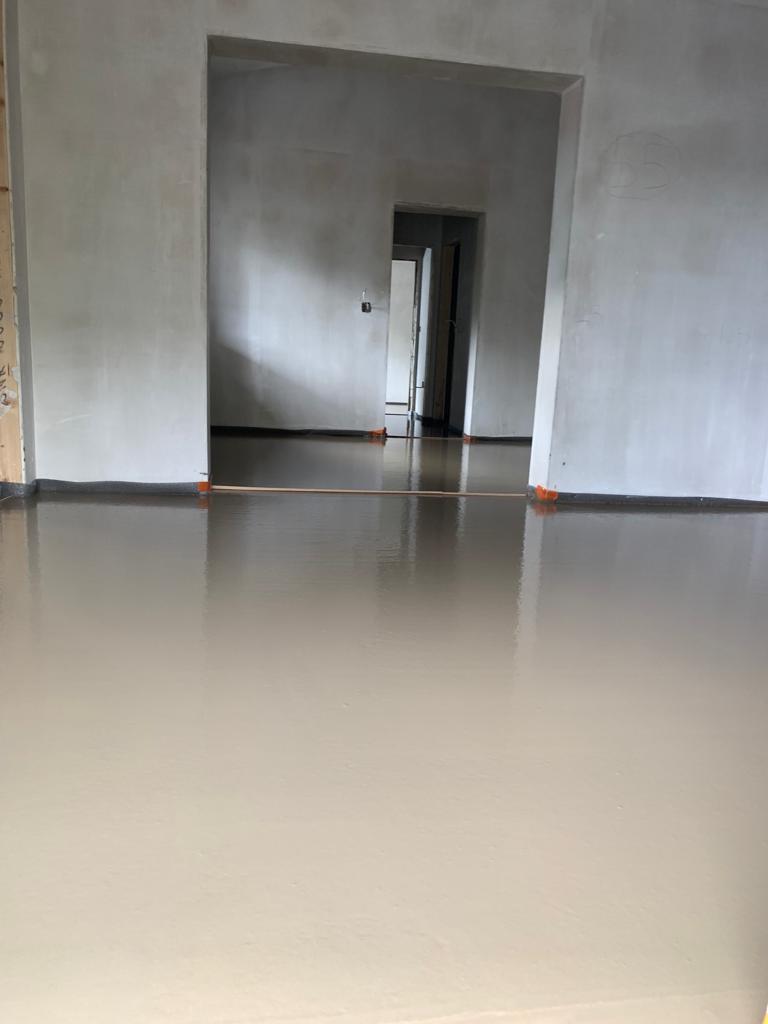
Immediately after application you should keep all windows and doors closed to protect the surface of your new floor from frost, direct sunlight, wind, rain and water ingress. In extreme cold weather, please ensure the air temperature above the freshly poured Ultraflo® is kept above 2°C.
After 24 Hours
After 24 hours, it is essential to open the windows and doors during the day to allow a flow of air through the building to aid the drying process. (Failure to do this will prevent the floor from drying effectively). Under standardised drying conditions, as per the British Standard (temperature of 20°C and 65% relative humidity), Ultraflo® will dry at a rate of 1mm per day for the first 40mm of depth and 1/2mm per day thereafter. Storage of materials on the screed surface, accidental spillages of water, humid or cold environments will all delay drying.
Force Drying ULTRAFLO® Using Undefloor Heating
Ultraflo® can be force dried after 7 days from installation by turning on the under-floor heating circuits to a temperature of 20°C, and gradually increasing it by 5°C increments per day, until it reaches its normal working temperature. It is essential that all windows are opened to generate enough ventilation for moisture released from the screed to escape, keeping the interior of the building free from a build up of condensation.
Moisture Testing
In keeping with all screeds, Ultraflo® must be dry prior to application of floor finishes. The floor moisture should be checked and the British standard approved test methods are Hair Hygrometer or Carbide Bomb. For impermeable floorcoverings such as tiles, wood and vinyl, Ultraflo® should be less the 75% RH (Hair Hygrometer) or less than 0.5% moisture (Carbide Bomb).
NOTE: Electronic meters are not suitable for accurate determination of the moisture content of calcium sulphate based floors, however they can be used to determine the wettest areas of the floor. An indicator of moisture is to tape a sheet of polythene, 50cm x 50cm to the floor and leaving in situ for 48hrs with the underfloor heating turned on. If condensation forms on the underside of the polythene or there is a colour change on the floor, the floor still contains moisture. (This is only an indicator, it does not replace the Hair Hygrometer or Carbide Bomb tests). Where underfloor heating is installed, this must be commissioned and run prior to application of impermeable floor coverings.
Floor Protection
When the Ultraflo® floor surface is dry and any operations are carried out where the surface could become contaminated i.e. spray painting, the floor should be protected.
Application of Floor Finishes
When applying cement based tile adhesives or levelling compounds to the floor, the floor must be primed with an acrylic or epoxy based primer.
This primer is required to create a barrier between the calcium sulphate in the screed and the Portland cement in the tile adhesive. All major tile adhesive manufactures supply primers, which they recommend for calcium sulphate screeds. These should be available from your tile adhesive supplier.
The surface of the Ultraflo® should be clean, free of any contaminates prior to application of the primer. Follow the primer manufacturer’s advice regarding application to hemihydrate calcium sulphate screeds. Calcium sulphate based adhesives are also available, which do not require the screed to be primed.